Most of us know someone with a phone that still works. The screen is fine, the battery gets through the day, the camera is good enough. Then the updates stop. A banking app asks for a newer system. A few favourite apps get slow, and a new phone gets bought. Nothing broke. The software moved on without it.
It happens so often that we have stopped noticing. But I think it is one of the biggest things software does to the environment, and almost nobody who builds software sees it.
For most phones, the bulk of the carbon is spent before the box is opened. Apple’s own report for the iPhone X put production at about 80% of the phone’s lifetime emissions, against about 17% for years of daily use. Other makers report much the same. Mining the metals, refining them and making the chips is where the energy goes.
That changes what efficient software means. Saving a little battery every day is good. But if an app or a website gets heavy enough that a three-year-old phone can no longer run it comfortably, the software has caused a new phone to be made. In carbon terms, that one upgrade can outweigh years of charging.
Then there is the old phone. It goes into a drawer, and sooner or later it comes out again. The UN’s Global E-waste Monitor counted 62 million tonnes of electronic waste in 2022, and only about 22% of it was recorded as properly collected and recycled. In Africa the recorded share was under 1%.
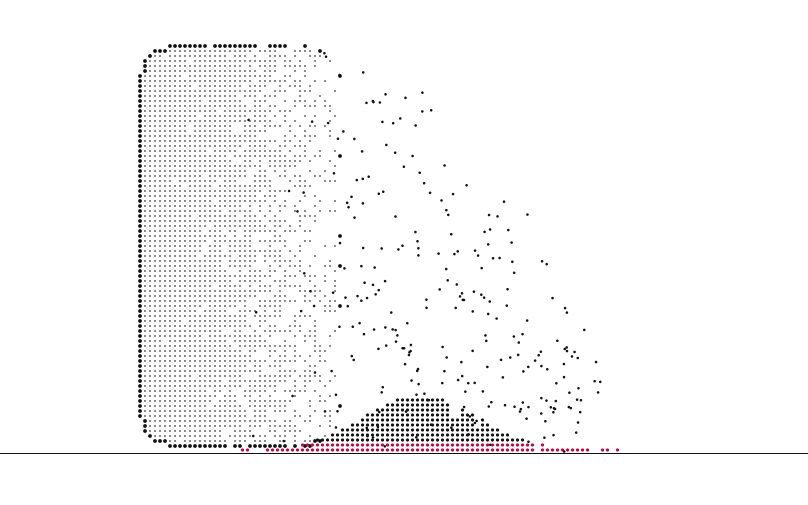
The rest is handled informally, and this is where my other field comes in. In environmental toxicology we look at what reaches people. Informal recycling often means burning cables to get at the copper and breaking boards apart by hand. That puts lead, mercury, cadmium and worse into the air and the soil, and the World Health Organization has warned that children living and working around these sites take the worst of it. The picture above is a rough sketch of that end. The phone comes apart, and what is left settles into the ground.
None of us can fix the e-waste trade from a code editor. But every day, quietly, we decide how old a device our software is willing to work on.
Keep a cheap, older Android phone on your desk and actually use it. If your product is slow there, it is quietly asking people to upgrade. When you drop support for an older system, let it be a decision somebody made on purpose, not something that happened because a default changed. Most of what makes software heavy on an old phone is code the user never needed, so ship less and the old phone stays useful for longer. And where the web is good enough, use it. A plain website on an older browser often outlives the native app that stopped working when its minimum version moved.
The greenest phone is usually the one someone already has. Software decides, more often than we admit, how long that is. No app store review will ever say a product made someone throw away a phone that worked.
So I think it belongs in how we judge our work. Not only how fast it runs on the newest phone, but how long it keeps the older ones alive.
Sources. Apple, iPhone X Environmental Report (2017). UNITAR and ITU, Global E-waste Monitor 2024. World Health Organization, Children and Digital Dumpsites (2021).